Composite Robot + Multimodal Large Model: Usher in a New Era of Embodied Intelligence for "Perception-Decision-Execution"
Overview
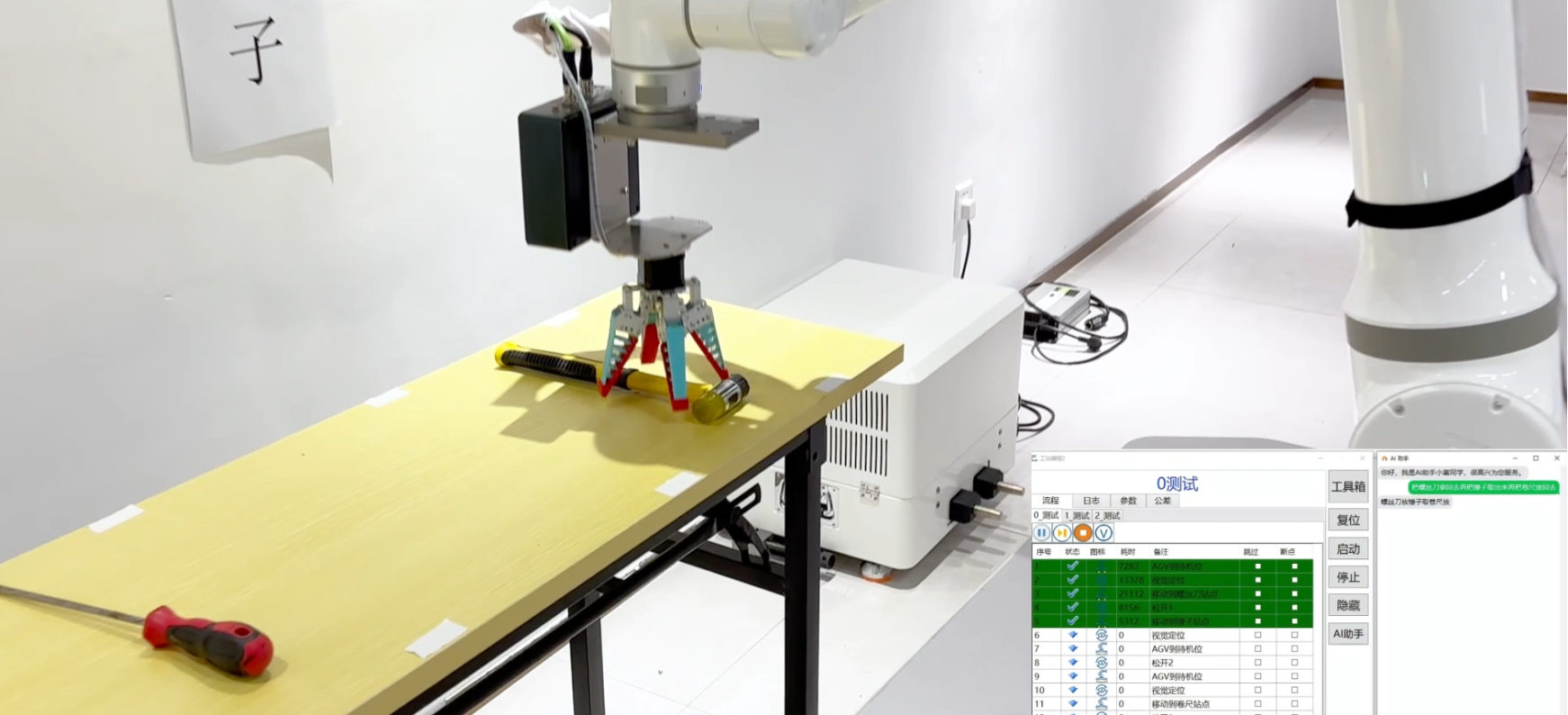
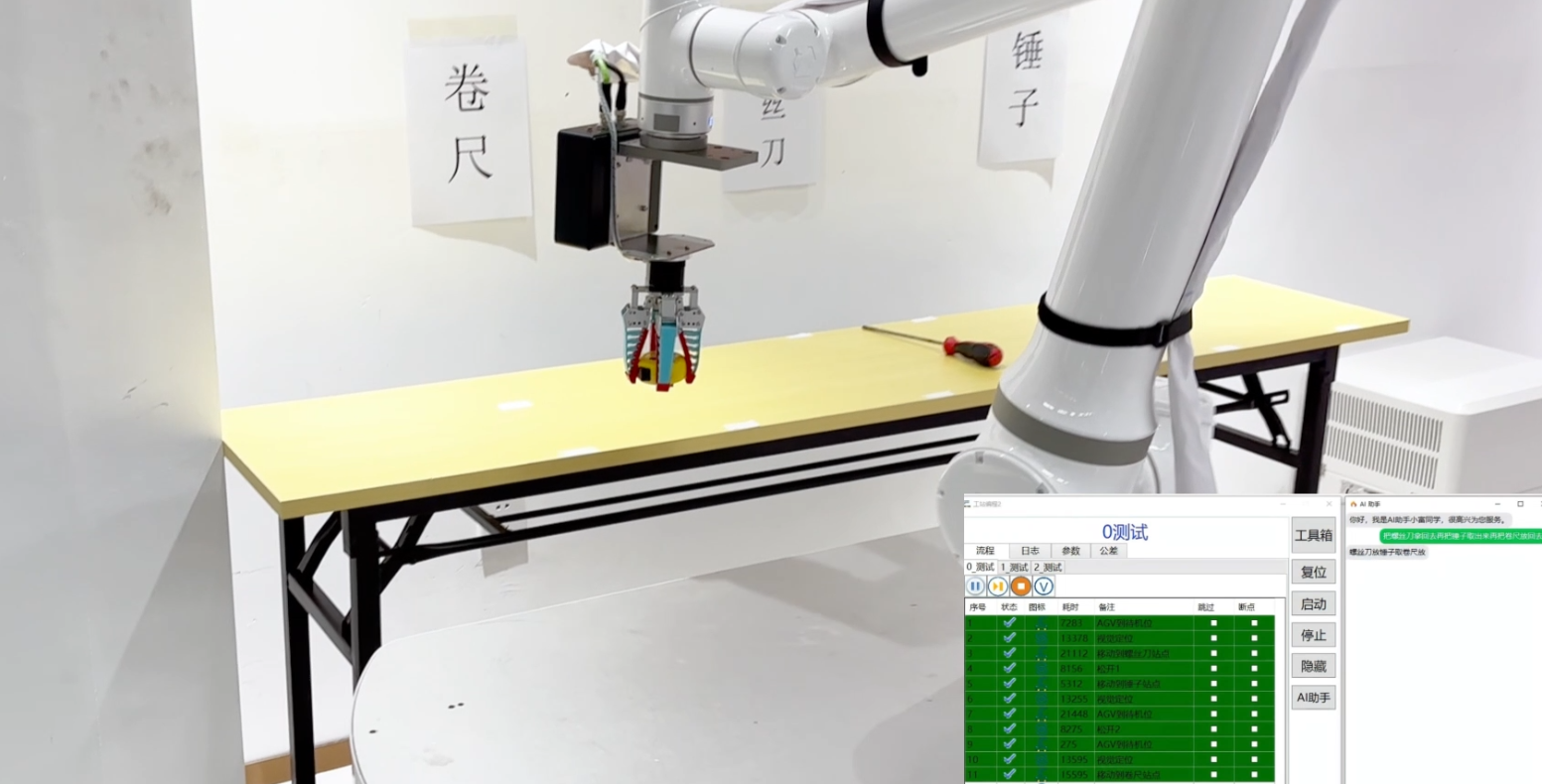
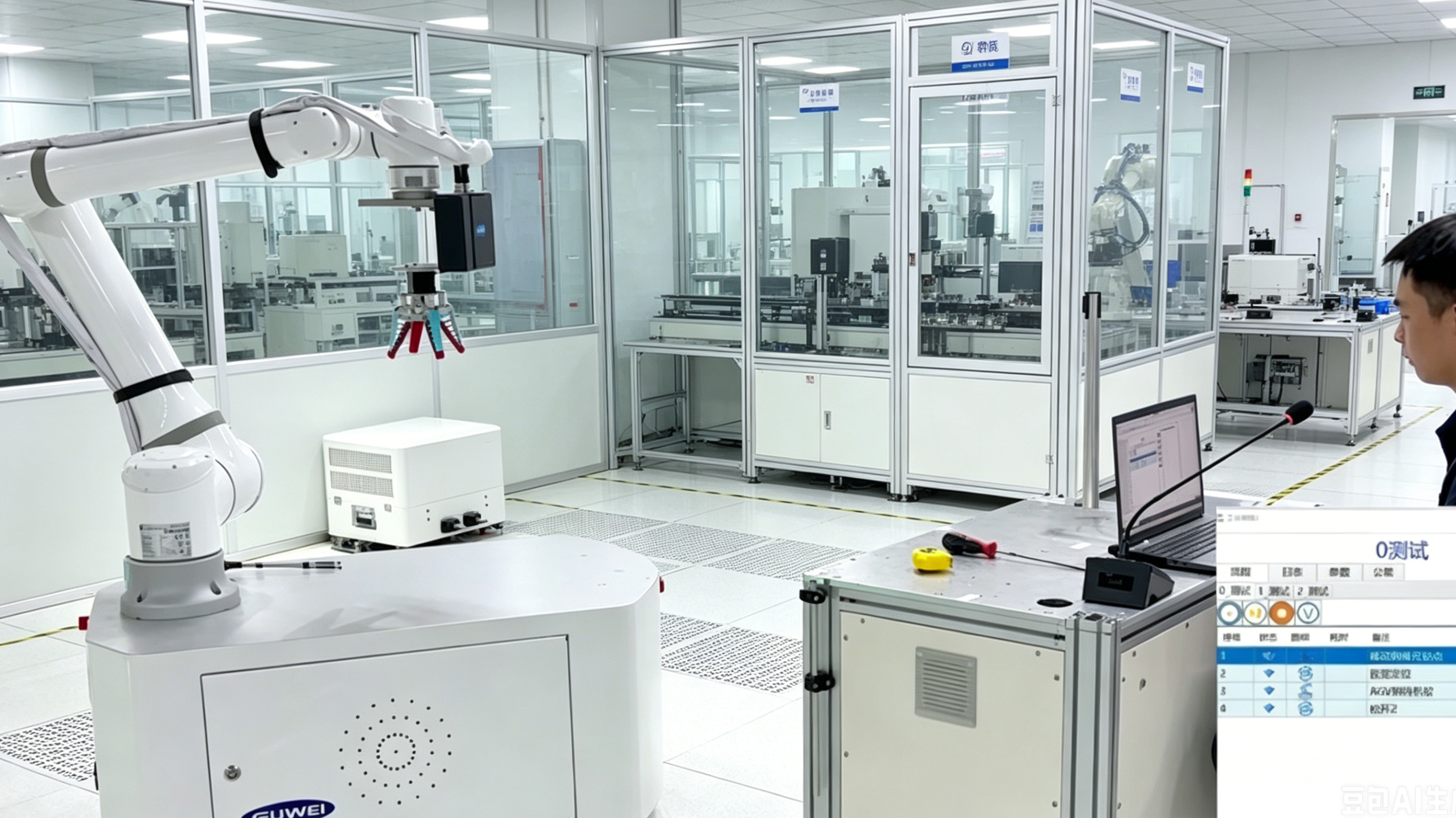
When composite robots are equipped with the "powerful brain" of multimodal large models, traditional automation equipment is evolving into truly intelligent agents. These agents can understand natural language instructions, independently decompose complex tasks, and adapt to dynamic environments in real time. Centered on 3D vision, composite robots and multimodal large models, we build a full-chain embodied intelligence system covering "Perception, Cognition, Decision, Execution". It enables robots to achieve a leap from "passive execution" to "active thinking" in scenarios such as industrial manufacturing, flexible logistics and commercial services.
Quick Overview of Core Values
Intelligent Decision-making: Empowered by multimodal large models, robots understand complex instructions, independently decompose tasks and plan optimal paths.
High-precision Operation: Guided by 3D vision and deep learning algorithms, positioning accuracy reaches ±0.5mm with a grasping success rate of over 99.5%.
Flexible Self-adaptation: Supports natural language interaction and graphical configuration; changeover time reduced by 90% for fast adaptation to multiple scenarios.
Real-time Collaboration: The integrated control platform uniformly dispatches robot clusters to form a closed loop of "Perception-Decision-Execution".
Continuous Evolution: Through reinforcement learning and simulation training, the system becomes increasingly "intelligent" with continuous improvement in operational efficiency.
Are you facing these "pain points of embodied intelligence"?
Difficulty 1: High-precision Positioning and Grasping — Ultimate Challenges on the "Millimeter Battlefield"
Composite robots grasp a wide variety of products, ranging from delicate electronic components to irregular industrial parts with extremely strict dimensional tolerance requirements. More challenging is that robots often need to complete positioning and grasping in narrow spaces. For traditional vision systems, recognition accuracy drops sharply under complex environments such as light variation, workpiece stacking and light reflection.
Difficulty 2: Complex Motion Planning — Leap from "Single-step Execution" to "Multi-step Collaboration"
The pick-and-place operations of composite robots are far more than simple "pick up and put down". They involve sequential execution of multiple steps including handling, rotation, positioning and obstacle avoidance. The precision and timing of each step require precise control. Once deviation occurs in any link, subsequent movements will suffer from the error effect of "a small discrepancy leads to a huge mistake".
Difficulty 3: Real-time Data Processing and Analysis — "Computing Power Shortage" for Industrial Large Models
Industrial large models need to process massive data from production lines in real time, including robot status, product dimensions, production progress and equipment signals. Such data must be collected, fused, analyzed and fed back for decision-making within milliseconds. Current bottlenecks in computing power and latency restrict large models from moving from "laboratory demonstrations" to "industrial-grade applications".
Difficulty 4: System Integration and Compatibility — Integration Pain of "Multiple Brands and Multiple Protocols"
Composite robots require seamless integration with existing CNC machine tools, inspection equipment, Warehouse Management System (WMS), Manufacturing Execution System (MES), etc. However, different devices adopt different protocols (Modbus, OPC UA, EtherCAT, etc.). Traditional multi-system integration features long cycles, complicated commissioning and high operation & maintenance costs.
Difficulty 5: Data Scarcity and Generalization Bottleneck — "Growing Pains" of Embodied Intelligence
One core bottleneck of current embodied intelligence is the severe shortage of high-quality training data. Robots perform well in laboratory environments but tend to fail when facing out-of-distribution unexpected conditions in real complex factory scenes. How to equip robots with the generalization ability of drawing inferences from one instance is a technical highland waiting for breakthroughs in the industry.
Our Solution: "Four-in-One" of Multimodal Large Model + Composite Robot to Systematically Build an Embodied Intelligence System
Core 1: High-precision Vision Guidance System — Solve positioning challenges of "variable lighting and diverse workpieces"
Pain Point: Complex factory environments, changing light conditions and diverse workpieces of different sizes lead to low recognition rates of traditional vision.
Solution: Composite robots are equipped with 2D/3D vision cameras combined with self-developed deep learning algorithms to realize high-precision positioning and recognition of products. The 3D structured light camera can acquire 3D point cloud data of workpieces, stably identify reflective metal parts, symmetrical components and other complex workpieces without being affected by ambient light.
Technical Highlight: Self-developed high-precision 3D vision algorithm delivers positioning accuracy up to ±0.5mm. Self-developed eye-in-hand calibration technology achieves calibration error less than 1mm, ensuring precise coordination between the vision system and mechanical arm.
Value Output: Stable operation under complex lighting conditions, workpiece recognition accuracy increased to over 99.5%, compatible with 95% of product specifications.
Core 2: Intelligent Decision-making Driven by Multimodal Large Model — Solve decision challenges of "complex tasks and difficult troubleshooting"
Pain Point: Traditional robots can only execute simple pre-programmed tasks and lack autonomous decision-making capacity when facing variable task instructions and environmental changes.
Solution: Deeply integrate multimodal large models (such as RobotGPT, Zidong Taichu, etc.) with composite robots, equipping robots with a complete capability chain of "Perception-Cognition-Decision-Execution".
Technical Capabilities
Natural Language Understanding: Operators can interact with robots via voice or text instructions without professional programming knowledge.
Autonomous Task Decomposition: The large model can independently decompose complex instructions (e.g. "transport material bins from Area A to Station B and notify the MES system") into subtasks and execute them in sequence.
Dynamic Environmental Adaptation: Based on deep reinforcement learning, robots can perceive environmental changes in real time during operation and dynamically adjust operation strategies.
Value Output: Task deployment efficiency increased by 80%, operation threshold greatly reduced, realizing intelligent interactive experience of "words take effect".
Core 3: Intelligent Motion Planning and Reinforcement Learning — Solve execution challenges of "optimal path and stable execution"
Pain Point: Complex motions involve multiple steps; traditional planning methods cannot balance efficiency and stability simultaneously.
Solution: Develop intelligent motion planning algorithms based on industrial large models, which generate optimal motion paths in real time according to production tasks and robot status. Meanwhile, reinforcement learning and simulation technology are adopted to pre-train and optimize complex motions for improved execution efficiency and stability of composite robots.
Technical Highlight: Generate massive training data via simulated environments to bridge the Sim-to-Real gap. Path planning efficiency increased by over 50% with zero conflicts in collaborative operations.
Value Output: Robot execution efficiency increased by 200%, motion stability reaches industrial standards to meet 7×24-hour non-stop operation requirements.
Core 4: Integrated Control Platform & Industrial Internet of Things — Solve collaboration challenges of "system integration and data silos"
Pain Point: Complicated integration between multi-brand and multi-protocol devices prevents data interconnection and forms information silos.
Solution: Adopt AI edge controller as the master controller of the production site to uniformly schedule signal interaction and task allocation for composite robots, transfer robots and production equipment. The platform natively supports standard industrial protocols including Modbus TCP, OPC UA and EtherCAT to achieve seamless docking with CNC machine tools, inspection equipment, MES/WMS systems.
Technical Architecture
Perception Integration: In-depth fusion of multimodal perception for real-time understanding of dynamic environments.
Autonomous Decision-making: Independently plan paths and operation sequences according to task intentions.
Flexible Operation: Realize closed loop of "Perception-Decision-Execution" in scenarios such as precision assembly, material handling and flexible production lines.
Value Output: System integration cycle shortened from several months to several weeks, real-time data sharing, production line collaboration efficiency increased by over 50%.
Why Choose Our Solution?
| Dimension | Traditional Automation / Standalone Solution | Multimodal Large Model + Composite Robot Solution | Improvement |
|---|
| Intelligence | Fixed programming, passive execution | Driven by multimodal large model, autonomous decision-making | Qualitative change from "execution" to "thinking" |
| Precision | Limited by mechanical positioning with error accumulation | 3D vision guidance, ±0.5mm accuracy | Precision improved by more than 5 times |
| Flexibility | Reprogramming required for changeover with long cycle | Natural language / graphical configuration, fast switching | Changeover time reduced by 90% |
| Efficiency | Single-task execution with difficult collaboration | Multi-robot collaboration + intelligent scheduling | Throughput increased by over 200% |
| Generalization Capability | Only preset scenarios can be handled | Empowered by large model to cope with unknown scenarios | Scenario adaptability improved by 10 times |
| Operation & Maintenance | Requires professional engineer support | Low-code / voice interaction, low maintenance threshold | O&M efficiency increased by 80% |
Relevant Cases